formula one dump
still a work in progress. will always be a work in progress. also this def dates me as a new fan; i have no knowledge of prost/senna/schumacher or earlier eras. i just know nelson piquet suuuuucks.
someone also wanted to know how i got interested in the sport; the answer is that i saw some funny f1 driver team radio clips that then turned into the algorithm shoving sim racing down my throat. i bought a starter set of wheels + pedals and had a lot of fun with the qualifying aspect of the sport (how to optimize for the fastest lap on a circuit). then, i started seeking out tips and tricks and watching how real f1 drivers do it. bring in the fact that i become super obsessive over things i like and here we are !
lore
- brocedes
context
"this man [Nico] knows Lewis Hamilton: friend, teammate, childhood buddy, rival, everything but a lover quite frankly" - David Croft (Crofty)
As kids, close friends Sir Lewis Hamilton and Nico Rosberg were in karting leagues together. They were teammates as early as 2000, racing for Mercedes-Benz McLaren in Formula A (nowadays KF1: the top level of karting), where Lewis won the European championship with Rosberg not far behind. Their karting boss described Lewis as the faster driver, Rosberg as the more analytical one. And these boys were close: they shared hotel rooms at races and played video games together.
The contrast in their backgrounds couldn't have been starker, though. Rosberg is the son of 1982 F1 world champion, Keke Rosberg; he grew up wealthy in Monaco. Lewis grew up on a council estate in Stevenage; his father Anthony worked multiple jobs to fund Lewis's junior racing career, remortgaging his house to afford Lewis's dreams. Lewis has also spoken openly about what it meant to be the only black driver in the paddock, and the racism he encountered throughout his career in motorsport going back to his junior years. The sport was not built with someone like him in mind, and he knew it, but even with such different upbringings, Lewis still had a friend in Nico.
Decades later, Lewis and Rosberg ended up teammates again, this time at the most dominant team in F1 history: Mercedes (hence the moniker, brocedes: bro + Mercedes).
The flashpoints are legendary. In 2014 Monaco qualifying, Rosberg locked up at turn 5 midway through Lewis's flying lap, forcing him to abort, and then kept pole. Lewis suspected it was deliberate, and after the race made it plain: "Nico and I, as with anyone, can count our friends on one hand. Nico does not come into those five friends I have." Rosberg's reply was almost poetic in its evasion: "We've always been friends, we always will be friends. But friends is a big word." Then at the Belgian GP, Rosberg's front wing clipped Lewis's rear tyre and punctured it. The stewards ruled it a racing incident, but Rosberg later admitted he'd deliberately left his front wing in to "prove a point." Mercedes held an internal meeting where Rosberg described it as an "error of judgement" and received an undisclosed punishment. Lewis called 2014 "the toughest year mentally of my career" and still won the championship.
2016 was the year Rosberg went all in: he'd spent three years chasing Lewis without a title and Lewis wasn't getting slower; so, he threw everything he had at it. His wife later said: "Nico became a different person in 2016. He was obsessed. He barely slept. Every waking moment was about beating Lewis." Rosberg himself said plainly that "sometimes friendships had to be sacrificed for a championship." In Spain, they collided on lap 1 and both retired. At the Malaysian GP, Lewis's engine catastrophically failed while he was leading (think smoke and flames) and he questioned publicly: "Something doesn't feel right. My engines keep failing. It's interesting, isn't it?" Rosberg took the title in Abu Dhabi, where Lewis notoriously slowed the pace to bunch up the field behind him, letting rivals through in hopes that they'd also pass Rosberg and knock him down the finishing order, costing him championship points. It was a last-ditch effort: if enough cars passed Rosberg, Lewis could still take the title. Mercedes were furious on the radio; it didn't work.
Five days after winning the championship, Rosberg retired. He said: "The mental and emotional toll of fighting Lewis for three years broke something in me. I can't do another year of that intensity." He was the first reigning champion to retire since Alain Prost in 1993.
Brocedes gets mentioned a lot in the F1 community to this day - with variations of other portmanteaus like britcedes (Sir Lewis Hamilton + George Russell; they're both British and posh) and bratcedes (George Russell + Andrea Kimi Antonelli; they're like siblings and Kimi is like 13 (exaggeration)) to describe the continued state of inter-team dynamics in the sport.
further reading: anything but a lover by anna gutierrez
linking this because anna's essay highlights that the lore around brocedes gets either flattened into pure rivalry or weirdly fetishized by fans, when the real story is sadder than either framing. she tracks them from genuinely close childhood friends to estranged rivals, and blames systemic issues - toxic masculinity, high-stakes competition, the pressure to be ruthless - rather than just personal malice towards one another. i would be remiss if i weren't to link this and point out that at the end of the day, we are people watching others from afar and hearing quotes and stories about them in clips; so take this brocedes context as an editorialized story and don't start sending hate to either party. - mazespin
context
Nikita Mazepin is a Russian driver who raced for Haas in 2021. The nickname, mazespin, is self-explanatory: the man spun. A lot. He spun in his very first F1 race (Bahrain 2021), and kept spinning throughout the season to the point that it became a meme. Fans built dedicated real-time tracking websites (didmazespin.com, hasmazepinspuntoday.com) and a whole twitter account just to track it (all now defunct, presumably because he's no longer in F1). He left F1 after one season with more spins than race starts (22 spins and 21 race starts).
Also: his father, Dmitry Mazepin, is a Russian oligarch whose company (Uralkali) became Haas's title sponsor in 2021, giving mazespin pay driver accusations. A "pay driver" is when a driver has serious money behind them and a cash-strapped team takes them on for it; so, not purely on merit. Mazespin was also embroiled in a sexual assault scandal before his first race even started, when a video of him groping a woman in a car circulated on social media; the fallout was devastatingly minimal at the time. Ultimately, in February 2022, Russia invaded Ukraine and Haas terminated his contract within days and stripped the Uralkali branding off the car before the season opener. - goatifi & "8 time world champion, Lewis Hamilton"
context
Nicholas Latifi is a Canadian driver who raced for Williams from 2020–2022. Another pay-driver situation: his father, Michael Latifi, is a billionaire who owned a minority stake in Williams. "Goatifi" is semi-satirical and it comes from two things: firstly, he was a backmarker (which is a slower driver/team that frequently gets lapped by race leaders) and most importantly, he kicked off one of the most controversial moments in recent F1 history.
During the 2021 Abu Dhabi GP (the final race), nearing the final lap of the championship fight between Lewis Hamilton and Max Verstappen, Lewis was leading and about to win his 8th world title. On lap 53 of 58, Nicholas crashed his Williams and triggered a Safety Car (see FAQs below for a safety car explainer). Race director Michael Masi then made a call that broke established procedure: he allowed the lapped (slower) cars between only Lewis and Max (not all of them) to unlap themselves, then restarted the race with one lap to go (cue the iconic Toto Wolff "no michael! no michael no! that was so not right!" line). Max, who had pitted for fresh softs under the Safety Car, passed Lewis on the final lap. Max won his first championship.
It's worth calling out explicitly: the controversy surrounding Masi's call is that following the correct procedure (letting *all* lapped cars through) would have meant the safety car could only peel off just *one* corner from the chequered flag. Technically, there's one corner of live racing, but practically, it's impossible to overtake: the cars are in single file at safety car speeds, Lewis can just floor it the moment the safety car peels off, and Max has no run-up whatsoever to make a move. It's effectively the same as finishing under safety car. Lewis would then win his 8th title and set a record in the sport. The only reason a full lap of racing happened at all is because Masi skipped the cars behind Max and rushed the restart.
The FIA launched an investigation into Abu Dhabi, concluded that Masi had not followed the correct procedure, replaced him as race director, and introduced a new Safety Car restart protocol. Latifi (and Masi) received death threats. Masi was seen as bit of a scapegoat: he made the call under pressure and under the impression that finishing the race under a safety car was something that the sport wanted to avoid. Lewis fans (#TeamLH) took to spamming "8 time world champion idc idc" all over the internet (not even specific to F1 related content). Nicholas retired from F1 after the 2022 season; the moniker goatifi stuck because depending on which side of the 2021 championship you're on, he either "ruined everything" or accidentally delivered the greatest moment in the sport. - "His career was finished without the intervention of the late Jules Bianchi who said to Ferrari, 'you’ve got to take this guy, you’ve got to make sure he gets to Formula 1'. And what a gift that was to give. In 2017, Charles Leclerc lost his father and in his final days, he told his father a white lie: that he’d made it to Formula 1; that he’d signed the contract. It wasn’t true then, but his driving has made it true now and look at what he’s done with the opportunity. The grandstands that he saw built as a kid now rise for him and for the first time in 93 years, this race is won by one of their own."
context
Jules Bianchi was Monegasque-born Charles’s godfather. It was Jules, Ferrari’s anointed next star, who first put Charles’s name in front of Nicolas Todt (the manager who’d carry Charles to Ferrari). Then, during a wet race at Suzuka in 2014, Jules's Marussia car slid off the track and collided with a recovery vehicle. He died later in July 2015 due to the severe head injuries he sustained from the crash. He was the first F1 driver to die from race injuries since Senna in ‘94. The Virtual Safety Car exists because of Jules, with some folks claiming that the development of the halo was accelerated in response as well.
The only points Marussia ever scored were his: ninth, at Monaco. A decade later, Charles would go on to win that same race. By then, Charles had also already lost his father, a Monegasque-born racing driver who had to quit his dream due to a lack of funding - who had poured everything into making sure that Charles did not suffer the same fate. To this day, Charles drives with the words “Papa” and “Jules” on his helmet; the Monaco 2024 win carries all of that (it was never only his).
The realities of Ferrari have been a bit crushing for the Tifosi (Ferrari fans) to have to deal with: the team's bad strategy fumbles - or handing Charles a shitbox (exaggeration) when strategy is right - left some folks feeling conflicted around how to feel about this race at the time. While I agree that Charles deserved to have won Monaco sooner, the moving commentary by Alex Jacques is so incredibly peak. It evokes so much emotion and to me, highlights one of the greatest things about this sport: the individual narratives that make the sport emotionally resonant. - grosjean 2020 bahrain
context
Romain Grosjean is a French-Swiss driver who raced for Haas from 2016–2020. On lap 1 of the 2020 Bahrain GP, he made contact with Daniil Kvyat and was pitched sideways into the barrier at 119 mph. The car split clean in half; the front half, with Grosjean in it, was speared through the barrier and burst into flames. The peak impact registered nearly 67G. This was an insane number to sit with, but after looking into it: an instantaneous spike lasting milliseconds is survivable, especially in an F1 car. The FIA investigation confirmed that Grosjean's survival cell, HANS device, helmet, and harness all performed exactly as designed, distributing and managing the forces well enough that the impact itself wasn't what nearly killed him. The fire was. He was trapped in it for 28 seconds.
He tried to get out repeatedly and couldn't (his left boot got stuck behind the pedals). He later said that it was thinking about his children - "for my kids, I cannot die today"; that made him try one more time. That attempt worked and he climbed out of a fireball and walked away with burns on his hands.
The halo, a titanium bar around the cockpit that drivers and fans had complained looked ugly and unnecessary when it was introduced just two years before this incident (in 2018), deflected the barrier away from Romain's head on impact. Without it, he would have been decapitated. Ross Brawn (F1 managing director at the time) said there was "absolutely no doubt the halo saved Grosjean's life."
Charles Leclerc saw it happen in his mirrors in real time and came straight on the radio; he said he feared the worst immediately. Daniil Kvyat, who made the initial contact with Grosjean, said his first reaction was anger ("what is he doing?") - then he saw the flames in his mirrors and his whole mindset flipped instantly.
Grosjean never raced in F1 again after that. He moved to IndyCar. Haas later gave him a special one-off run in an F1 car so he could have a proper goodbye to the sport on his own terms.
clip of the crash - danny ric, the one that got away
context
"I always thought Daniel Ricciardo had at least one Formula 1 world championship in him. And I know he did. But it's game over." - Will Buxton, Drive to Survive
Daniel Ricciardo is an Australian driver and, for a long stretch, probably the most universally loved person on the grid. He was (likely still is) beloved by fans, drivers, journalists, and teams alike. He was funny, warm, charismatic, and brought along fun energy - like the Australian tradition of the shoey (drinking champagne from his racing boot on the podium after a win). Daniel acquired the nickname "honey badger" because of this split between charismatic, easy-going person and fierce, competitive racing driver.
He joined Red Bull in 2014 as teammate to four-time world champion Sebastian Vettel and immediately outscored him by 71 points. For a rookie at the top team performing like that against the reigning champion, that announcement alone should have defined the next decade of his career.
Then, Max Verstappen arrived. He was promoted mid-season in 2016 from Toro Rosso (Red Bull's junior team) to Red Bull, and won on debut. The sport really wanted Max and Red Bull really wanted the story: Dutch-born kid of racing driver Jos Verstappen, youngest driver to have ever joined the sport (at 17), dominating on Red Bull's team.
Max's qualifying pace is genuinely something else - his one-lap ability considered freakish even by F1 standards. He is the kind of driver who routinely finds time that nobody else can find. Max earned the team's focus, but the consequence is that Red Bull has this consistent pattern of making it Max's world first (see bullet point "curse of the red bull 2nd seat"). At the time, Daniel could see where things were headed. In 2018, despite being under contract, he blindsided Red Bull by signing with Renault, a significantly smaller, less competitive team. His future backfills at Red Bull would later confirm what he'd sensed: that the car was being built increasingly around Max's preferences. My goat Alex Albon described it: "When I got into the Red Bull … I mean there was so much nose on the thing that if you blew on the wheel the car would turn. If you play Call of Duty, or a game like that, turn your sensitivity up to the highest it will go. That's what it's like to drive that car."
Daniel later spoke about his decision to leave Red Bull: not being the driver the team was building around and wanting to go somewhere that was fully behind him. And he bounced over the years: Renault, then McLaren, then back through Red Bull's junior program via AlphaTauri. In 2023, he fractured his wrist at the Dutch GP ("it was hit Piastri or hit the wall"), came back, and was not retained for the full 2024 season. That was effectively the end of his F1 career.
This whole arc is where "The One That Got Away" comes from; it's the Katy Perry song that some fans have attached to danny ric as a kind of shorthand for the feeling of watching someone the sport loved slip away before it was properly settled. Fun fact: there's actually a tradition of songs picking up F1 meanings: the last bit of "The Chain" by Fleetwood Mac and "Skyfall" by Adele are two other relatively well-known ones, used by editors for a variety of F1 content. "The One That Got Away" joins that lineage, but the feeling it names is specific to one driver, beloved by most: the particular grief of watching talent and personality not quite get what they deserved. - curse of the red bull 2nd seat
context
"Red Bull has a problem and it's Alex Albon." - [source]
(read the danny ric bullet point above first; it's the precursor to this one)
Red Bull is known for having a sink or swim mentality in their approach: if you can't perform, you're out (fast). After Daniel left the team, they do what they always do: pull from their junior team, and it's Pierre Gasly that gets the call in 2019. Gasly would go on to win races at AlphaTauri and have a solid career at Alpine, but in that Red Bull, next to Max, he was too far off his pace. Red Bull demoted him back to Toro Rosso mid-season and called up another Toro Rosso driver: Alex Albon.
Alex is easy to root for: he's warm, kind, unpretentious, and worked hard; however, he still wasn't even close to Max. Red Bull dropped him after 2020.
Then Sergio "Checo" Perez. From his very first conversation with team principal Christian Horner, Checo already knew the deal. He later said: "At Red Bull, everything was a problem. If I was faster, it was a problem and it created a very tense environment. During my first discussion with [Horner], he told me: 'We're going to race with two cars because we have to have two cars, but this project was created for Max.'" Checo came up through the midfield and never had the big backing that fast-tracks some careers, and fans (read: me) loved him for it. And he gave them reason to: in Abu Dhabi 2021, mid-race, he defended the shit out of Lewis's Mercedes and held him long enough for Max to close the gap; Max won his first title that year - with Checo placing 4th in the overall drivers' standings. Checo had good seasons at Red Bull, won races, and was genuinely competitive for a while. And then the car evolved further around Max, and Checo fell behind in points. By 2024, the gap between them was large (285) and he was let go. He later said being Max's teammate at Red Bull was the hardest job in Formula 1.
By the way, when Alex landed at Williams (a car with no business being near the points), he was routinely one of the best drivers on the grid relative to his machinery. He qualified in positions that made no sense for that car. Had points finishes that had no right to happen. In my opinion, Red Bull has a problem and it's Red Bull.
Other people who have suffered this same fate include: Liam Lawson, Yuki Tsunoda, and Isack Hadjar (currently in the second seat). I wish the best for Hadjar and I hope he breaks this curse; otherwise, Red Bull has eyes on Arvid Lindblad of Red Bull's junior team, VCARB :) There's this running joke that you don't get promoted to Red Bull's second seat: you get demoted. - i will not be driving for Alpine in 2023
context
In July 2022, Fernando Alonso announced he was leaving Alpine for Aston Martin. Alpine, needing a replacement, announced that their reserve driver, Oscar Piastri - 2020 F3 champion, 2021 F2 champion, one of the most decorated junior careers in recent memory - would be their 2023 driver. Piastri's response was immediate:
"I understand that, without my agreement, Alpine F1 have put out a press release late this afternoon that I am driving for them next year. This is wrong and I have not signed a contract with Alpine for 2023. I will not be driving for Alpine next year."
The tweet went viral within hours; it's one of the most viral moments in F1 social media history. Even soccer clubs were using the tweet format by the end of the week. Alpine CEO Laurent Rossi publicly asked "shouldn't he be a little grateful?" and said "there's no excuse for Piastri's behaviour." Team principal Otmar Szafnauer said he lacked "integrity." They took the matter to the F1 Contract Recognition Board to try to enforce their claim and lost. The CRB ruled unanimously that Alpine had failed to send over finalized contracts despite multiple deadlines (their claim was described in reporting as "amateurish"), that the only valid contract was Piastri's McLaren deal, and ordered Alpine to pay roughly £530,000 in legal costs. Alpine scrambled and got Pierre Gasly from AlphaTauri instead.
Oscar went to McLaren in 2023 as Lando Norris's new teammate. By his second season, Oscar had two race wins (Hungary and Baku), he was 4th in the Drivers' Championship, and a key part of McLaren winning the Constructors' Championship (their first since 1998!). By his third year, Oscar had another 7 race wins and led the Drivers' Championship for 15 rounds (longer than either Lando or Max - the two other drivers in the championship battle that year). A late-season fade cost him the title; Lando won it by 13 points, with Max between them in 2nd. Suffice to say: Mr. Piastri made a great decision for his career.
His beef with Alpine sitll exist and in 2025 at the Austrian GP, after an incident involving an Alpine car, Oscar came on the radio with: "Alpine still managed to find a way to fuck me over all these years later." - max verstappen 2023 dominance
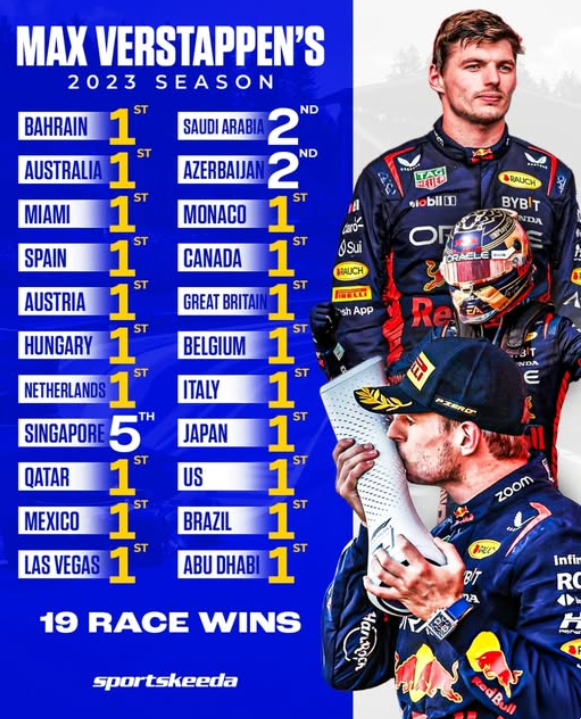
context
lmao:
- 2026 Barcelona-Catalunya GP
context
"a legend forged in silver resumes in red" - Alex Jacques
There are 3 things we need to talk about here:
1. Lewis Hamilton won his first Grand Prix for Ferrari at Barcelona (with some exquisite commentary by Alex Jacques as per usual). This is his first win in almost 2 years (since the 2024 Belgian GP - back when he was still at Mercedes), and Ferrari's first win since the 2024 Mexican GP.
In 2025, after getting knocked out in Q2 at the Hungarian GP, Lewis told Sky, "I'm useless, absolutely useless" and said Ferrari should probably change drivers.
The current shape that Lewis is in seems like a stark contrast to last year (yippee!); so, what got us to the win in Barcelona? I can only speculate, but: firstly, Riccardo Adami (Lewis's race engineer) never really got on the same page with Lewis specifically, clashing with him on team radio for most of 2025 and reportedly failing to adapt to the emotional support Lewis needed (compared to the more clinical relationship Adami had with previous drivers). By early 2026, Adami had been moved to a new role within Ferrari's academy and Carlo Santi stepped in as a stand-in just before preseason (funny coincidence: the last driver to get a win with Ferrari before Lewis was the driver Lewis replaced, Carlos Sainz. Then, Lewis got a race engineer named Carlo Santi - which you can rebracket into "CarloS anti" aka anti Carlos - and promptly took the "last man to win for Ferrari" title right off of him). Ferrari had Cedric Michel-Grosjean (poached from Oscar Piastri's side of the McLaren garage) lined up to take over permanently after a few races, but Lewis and Santi clicked so immediately that the handover never happened (i think the role is in this weird shared state); Lewis calls him "the Italian Bono," after his old Mercedes engineer Pete Bonnington. He also got Ferrari to swap his brake discs from their long-time supplier, Brembo, to Carbone Industrie (the brand he'd used his whole career at Mercedes). There is some drama here with the other side of the Ferrari garage, but I digress.
Barcelona itself came down to a perfectly timed pit stop under a Virtual Safety Car (gifted by Alonso) as part of a three-stop strategy, which got Lewis past George Russell and let him gap the Mercedes by 20 seconds for the win (the first all-British F1 podium since 1968!).
And of course Nico Rosberg was there for the post-race interview (see bullet point "brocedes" above for the significance), but the circuit makes everything feel more ironic: this is the same circuit where, a decade earlier, Lewis and Rosberg had a big, dramatic lap 1 collision. You truly can't write this shit.
2. Speaking of Nicos, let's talk about Nico Hulkenberg, who was fighting Liam Lawson for 9th when Lawson ran wide at turn 12 on lap 28 and kicked up gravel that hit the kill switch on the back of Hulk's car. This is the lever marshals use to cut a car's engine in an emergency. Hulkenberg said: "I've never seen or heard about this, to be honest, in my career." Again: you cannot write this shit.
3. Lastly, this 2026 season started off with everyone realizing that Mercedes had an absolutely dominant car and the 1st driver, George Russell, looked to be well-positioned for the world championship. However, he'd been getting beaten by his younger teammate in the second seat, Kimi Antonelli. With 5 back-to-back race wins under Kimi's belt, Barcelona was looking like a secured comeback for George - who got pole (1st) in quali. Due to a team mistake, George's front wing got incorrectly adjusted by a faulty tool during his pit stop on lap 36, leaving him with an oversteery, unstable rear end that cost him about seven tenths a lap. At this point in the race, the battle for first was between George and Lewis - until that VSC stop on lap 42 put Lewis in front for good, at which point it became a battle for second between the two Mercedes. With five laps to go, Kimi finally got past George for P2 and before he could even enjoy it, his car died with an electrical failure just one lap later, 9 turns short of ever seeing lap 63: George's own racing number. This shit? You cannot write it.
The first half was very boring; so I'm not putting it in chef's choice: races.
memes
- kimi antonelli powered by titanium dioxide
context
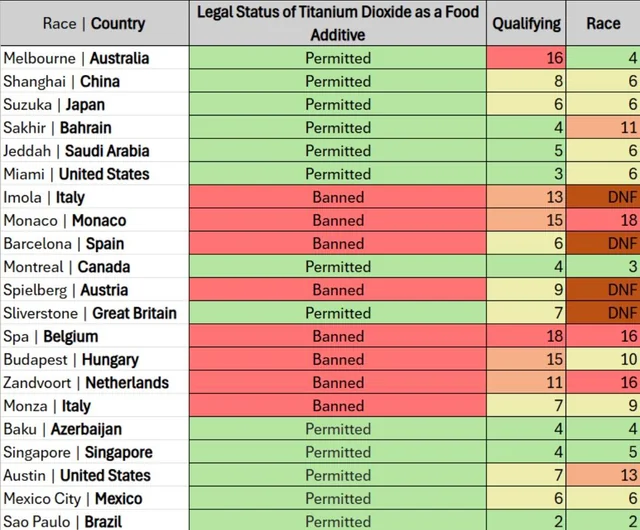
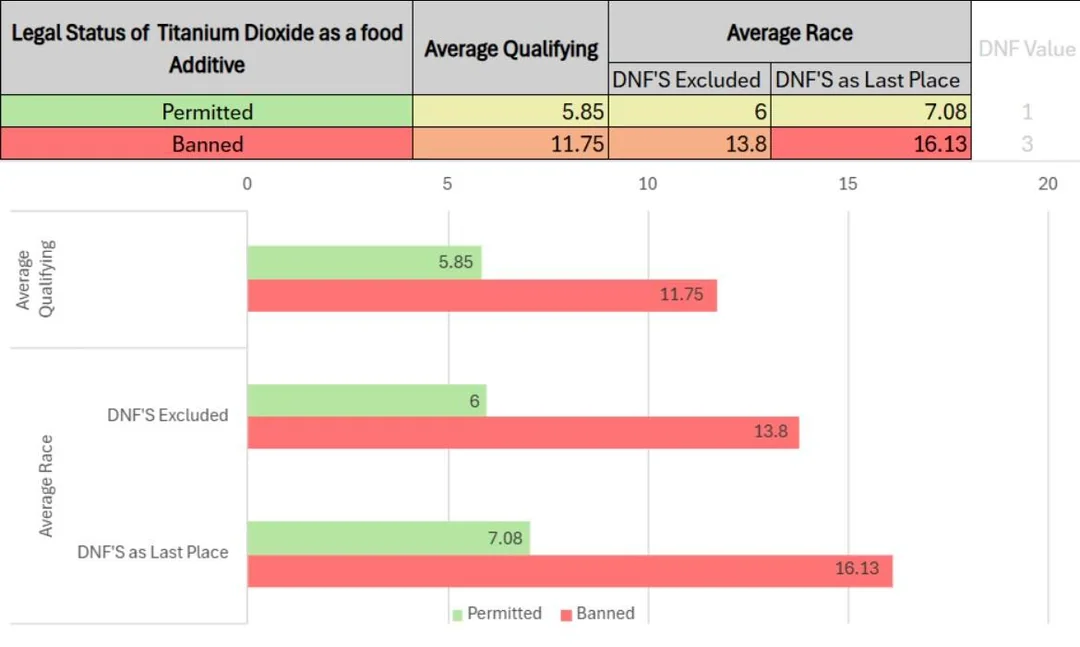
- "when anything doesn’t go his way, he lashes out with unnecessary anger and borderline violence"
- will buxton drive to survive quotes
- "you’ve got a problem, change your fuckin car"
- toto wolff anger issues
- "must be the water"
- anything kimi raikkonen (STEERING WHEEL give it to me, i was having a shit, bwoah, 2006 Monaco mechanical fire boat walk)
- lance stroll interrupts
context
monaco is a track known for how difficult it is to overtake; just as we were about to see some action, the broadcast cut to lance stroll fumbling
- sergio cheecoooooo pereeeezzzzz
- alonso + gp2 engine
- smooth operator
- seb has instagram? what i’m missing?
- pole position?
content
- World’s Fastest Camera Drone Vs F1 Car (ft. Max Verstappen)
- Formula 1 Cars, Explained with Max Verstappen
- THE BEST 24 HOURS OF MY LIFE (lando 2025 WDC)
- Leclerc Sunset Lap vs Verstappen Storm Lap
- F1 LEGO Race In Full | 2025 Miami Grand Prix
chef's choice: races
- 2008 Brazilian GP
- 2021 Abu Dhabi GP
- 2024 Monaco GP
- 2026 Canadian GP (lmao)
FAQs
i anticipate that reading some of the lore might be confusing. i’m listing out some commonly asked questions about the sport, along with answers, to help:
- wait so is it a team or individual sport? who competes with who?
- so how does one become a driver?
- don't they just drive in circles? i don't get it
- quali/qualifying
- what is a safety car?
answer
a safety car (SC) is a high-performance road car that comes out for serious incidents: major crashes, cars in dangerous spots, or debris requiring marshals on track. the leader queues up behind it; the rest of the field follows in order (i.e. no overtaking allowed). this leads to the cars naturally bunching up: the leader slows first, but the cars further back are still at racing speed and catch up fast. once the danger has cleared, the SC peels off and racing resumes.
a Virtual Safety Car (VSC) is for smaller stuff - like a car stopped somewhere relatively safe or minor debris. instead of a physical car, all drivers get a speed limit enforced via a readout on their steering wheel. since everyone just slows down in their own space rather than queuing behind anything, the gaps between cars stay roughly the same.
pitting under a full SC is effectively "free" since the whole field is bunched up: the car behind you is stuck in the queue too; so, you don't lose position the way you normally would. under a VSC the gaps are preserved, so that benefit mostly doesn't apply.